
Every “boho bedroom inspo” post looks the same: a gorgeous room, a rattan bed frame, a plant in the corner, and zero explanation of how the person actually got there. You scroll, you save the photo to a board named “dream room” that you’ll never open again, and your actual bedroom stays exactly as beige and boring as it was yesterday.
That’s the gap this post is filling. Not another gallery of pretty photos. An actual plan, with real products, real price ranges, and a version of it that works even if your landlord thinks a single nail hole is a personal attack.
Quick Answer #
An eclectic boho bedroom mixes three things on purpose: vintage or vintage-inspired pieces, natural boho textures (rattan, jute, macrame, linen), and a couple of modern touches so the room doesn’t feel like a time capsule. The trick isn’t “more stuff.” It’s layering with a plan: start with a neutral or earthy base, add one or two patterns through textiles, bring in warm lighting, and let two or three personal, storytelling pieces (a mirror, a vintage find, a plant corner) do the rest. You can do this on any budget, and you can do almost all of it without touching a wall.
What Eclectic Boho Actually Means #
Eclectic boho isn’t “throw everything you own into one room.” That’s just clutter with better lighting. It’s a specific mix of three ingredients:
- Vintage or vintage-inspired pieces that give the room a sense of history, even if the “history” is a $40 mirror from three weeks ago
- Bohemian textures: rattan, jute, macrame, linen, woven baskets, warm wood
- A modern anchor or two, like a sleek lamp or a clean-lined nightstand, so the room reads as curated rather than accidental
The rooms that actually look good balance these three so no single one dominates. A bedroom that’s 90% vintage starts to feel like a museum. A bedroom that’s 90% boho texture starts to feel like a yoga retreat gift shop. The eclectic part is the tension between old, natural, and new, held together on purpose.
✨ Some links in this post are affiliate links. If you purchase through them, I may earn a small commission at no extra cost to you. It helps keep this blog going!
🌿 Some external product pages may contain images of women. Brothers in faith, please proceed with caution. Responsibility lies with the individual.
Start With Your Base: Color and Bedding #
Before you buy a single decorative object, sort out your color foundation. Most eclectic boho bedrooms that actually photograph well (and feel good to sleep in) use an 80/20 split: 80% warm neutrals (cream, oatmeal, warm brown, soft white) and 20% color, usually through textiles rather than walls.
That 20% is where your bedding earns its keep. A patterned duvet or a textured quilt does more visual work per dollar than almost anything else in the room, because it’s the biggest surface area you’ll touch daily.
Best Products for a Boho Bedding Foundation:
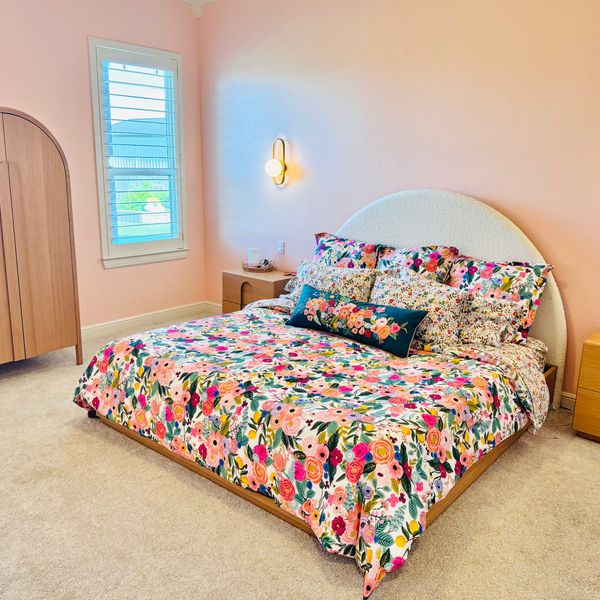
- Best overall: Rifle Paper Co. Percale Duvet Cover in the Garden Party print gives you that vintage floral without looking like it belongs in your grandmother’s guest room (no offense to grandmothers, their guest rooms are underrated).
- Best budget: Roomtery’s earthy tones aesthetic bedding set gets you 90% of the look for a fraction of the price. Shop directly at roomtery.com and use code PETAL10 for 10% off.
- Best splurge: Quince’s European linen cotton stitch quilt set is the kind of piece that ages well, literally, since linen only gets softer and more lived-in with washing.


The Pattern Rule Nobody Explains #
Every roundup post tells you to “mix patterns” without telling you how many is too many. Here’s the actual rule interior stylists use: pick three patterns max, and vary their scale. One large-scale pattern (a big floral or medallion print, usually your rug or duvet), one medium pattern (stripes, checks, a smaller print on a throw pillow), and one small or textural pattern (a woven texture, a tiny ditsy print, a knit).
If you go past three, the eye stops being able to rest anywhere, and that’s when a room stops looking “curated eclectic” and starts looking like the clearance bin exploded. Color families matter here too. Keep your patterns in the same warm or cool family so they argue less with each other.
Layering Rugs Without Creating a Tripping Hazard #
Rug layering is a classic boho move, and it works, as long as you don’t turn your floor into an obstacle course. The formula: one larger, mostly neutral base rug (jute or a plain woven texture) topped with a smaller, patterned accent rug, usually placed at an angle or centered under a chair or bench, not directly in a walking path.
Best Products for Rug Layering:
- Best overall: Rifle Paper Co.’s Laurel Wildwood Garden power-loomed rug in cream works as either your base or your statement layer, depending on what else is in the room.
- Best budget: Kore Kawaii’s plush carpet tiles let you build a custom-sized rug for oddly shaped rooms, and you can swap out a stained tile instead of replacing the whole rug (genuinely useful if you have a cat with main character energy). Kore Kawaii ships free worldwide on their kawaii fashion, accessories, and decor, and code PETAL10 takes 10% off at korekawaii.com .
- Splurge option: Roomtery’s earthy tones tufted accent rug adds a softer pattern if your palette leans brown-white instead of warm floral.


Vintage Meets Modern: Furniture and Bedside Tables #
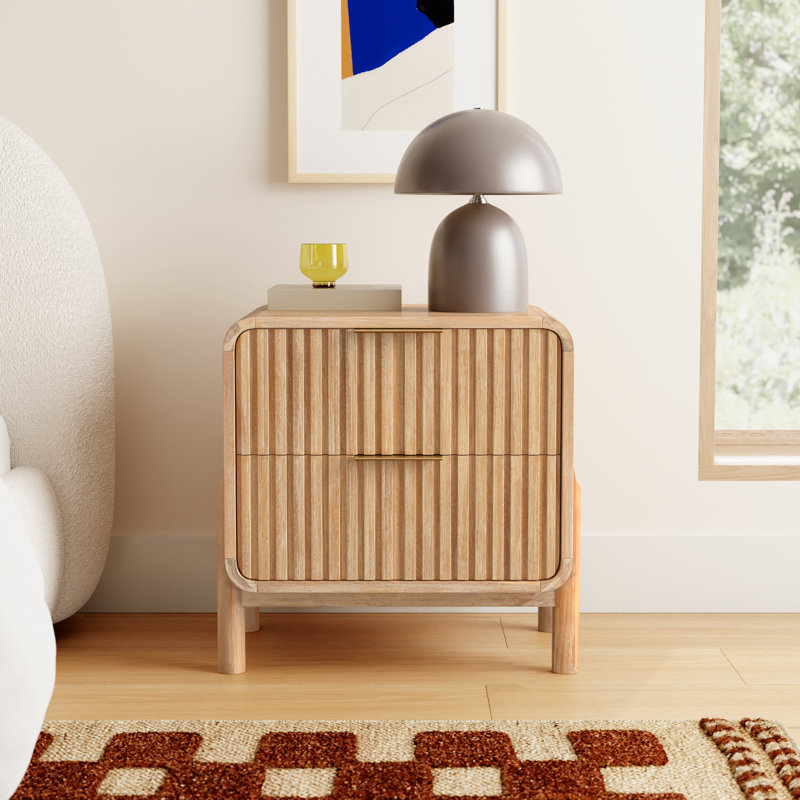
This is where the “eclectic” part of eclectic boho actually shows up. A rattan nightstand next to a sleek modern lamp. A vintage-inspired dresser with clean modern hardware. You don’t need matching furniture, you need furniture that agrees on tone even when it disagrees on era.
Best Products for Bedside Tables:
- Best overall: Driftway 3-Drawer Nightstand table hits the dreamy look instantly.
- Best budget: Luthien Nightstand gets the look for noticeably less.
- Best splurge: Serena & Lily’s Pinecrest nightstand, for when you want a piece that could believably live in a boutique hotel.


Lighting That Actually Sets a Mood #
Overhead lighting is the enemy of a cozy bedroom. It’s flat, it’s harsh, and it makes even the prettiest room look like a waiting room. Boho bedrooms lean on layered, low, warm light instead: a scalloped lamp shade on the nightstand, a plug-in night light in a corner, fairy lights tucked somewhere unexpected.
Best Products for Boho Lighting:
- Best overall: Posie and Penn’s pleated scalloped lampshade adds texture even before you turn the light on.
- Best budget: Roomtery’s Cherry Pudding Mini Table Lamp for that soft ambient glow without committing to a whole new lamp. (And you even get a 10% off using code PETAL10!)
- Best splurge: Serena & Lily’s shades for the Larkspur petite lamps, if you already own the base or want a full matching set.


Want more fairy lights specifically for that late-night, string-lights-around-the-headboard look? The At Home Waterfall Fairy Lights drape in a soft cascading style instead of a straight line, which reads a little more intentional than the standard strand.
Mirrors and Wall Decor With Personality #
A mirror does double duty in a boho bedroom: it’s functional, and it’s often the single most “personality” piece in the room. Rattan-framed mirrors are the classic pick because the woven frame ties your walls back to your rug and your nightstand without matching them exactly.
Best Products for Mirrors and Wall Decor:
- Best overall: Serena & Lily’s Ojai rattan mirror, a genuinely versatile shape that works over a dresser or as a statement leaning piece.
- Best budget: AllModern’s Wood Framed Scalloped Wall Mirror, does the job for less.
- Best splurge: Serena & Lily’s Montara rattan mirror, a larger woven statement piece if your wall has the space to spare.

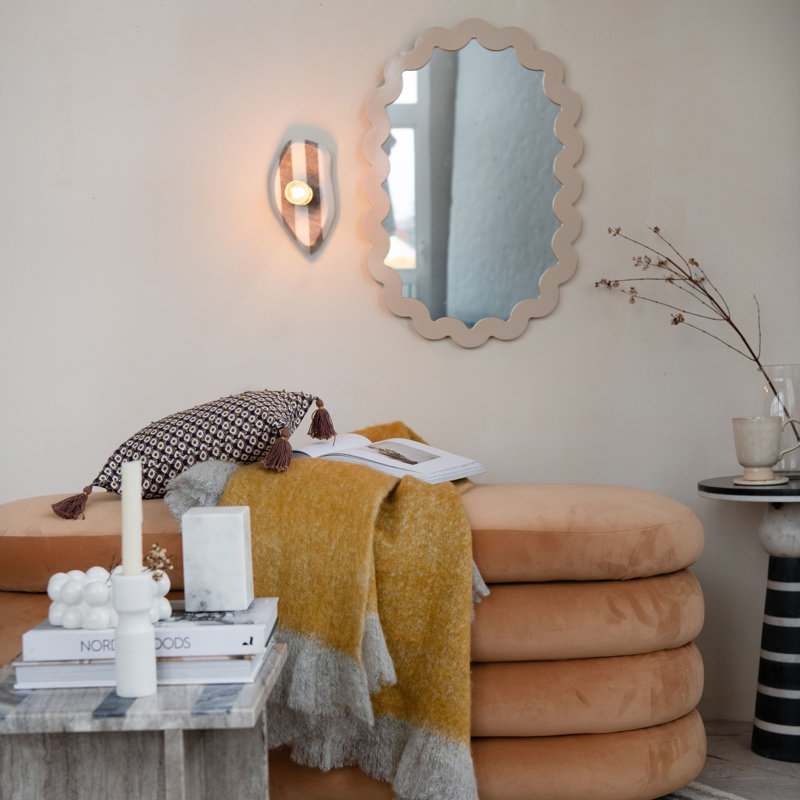

For wall decor beyond mirrors, ChicChoi’s blossom pink plaid mirror wall decor piece is a fun, budget-friendly option if you want something with more color than plain rattan (shop ChicChoi directly at chicchoi.com , code PETAL10 for 10% off). A crescent moon wall hanging or a small gallery of vintage-style frames also fills wall space without needing a single new piece of furniture.
Curtains That Filter Light, Not Block Your Landlord’s Approval #
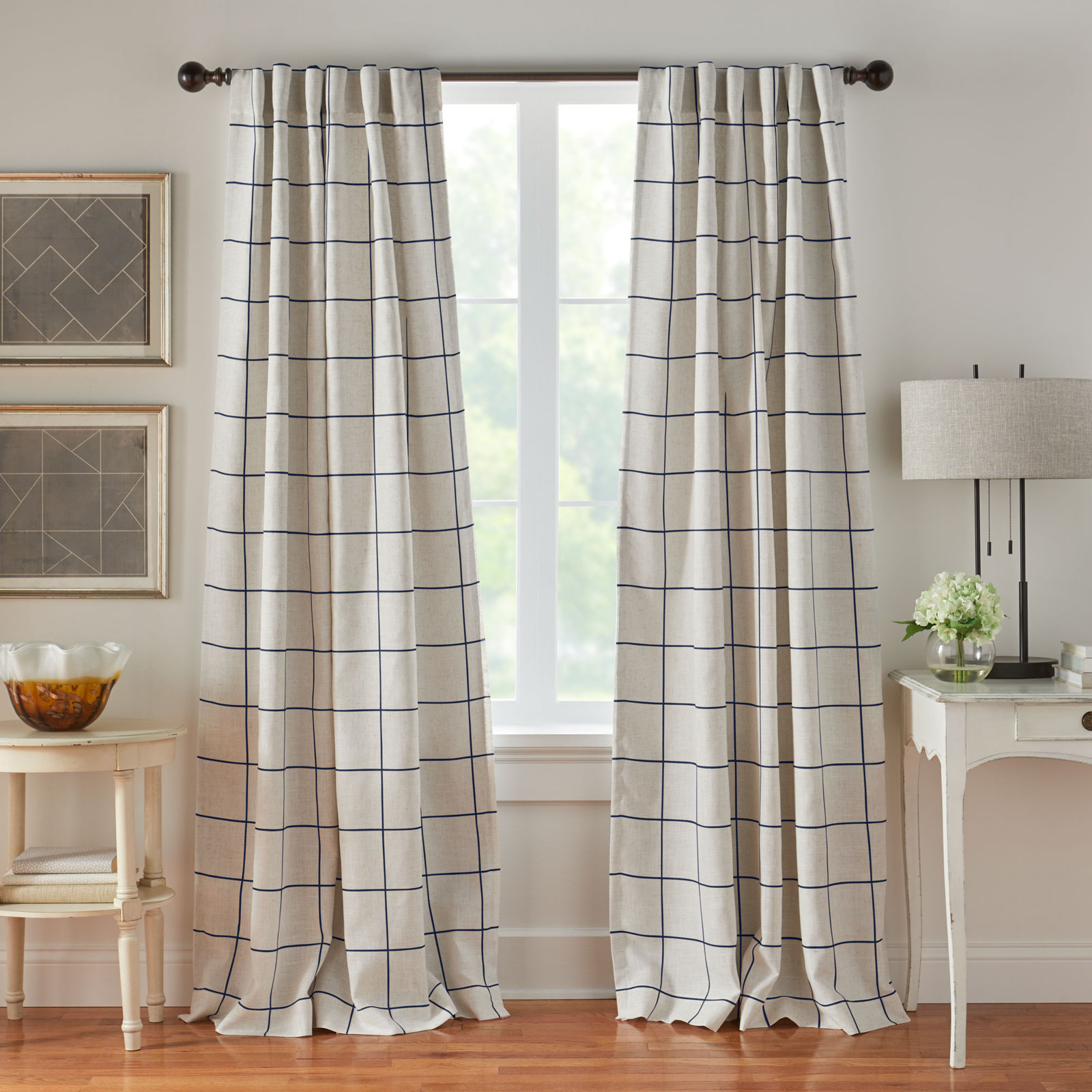
Sheer linen curtains are the boho default for a reason: they let light through with texture instead of blocking it out completely, which keeps the room feeling airy during the day. If you need actual darkness for sleep, layer a blackout curtain underneath or behind a sheer one instead of choosing one or the other.
Best Products for Boho Curtains:
- Quince’s European linen sheer curtain set in cloud gives you that breezy, natural light filter.
- AllModern’s Laurene blackout curtain works layered behind the sheers on nights you actually need to sleep past sunrise but they are not fully blackout and yes I don’t know why they flagged it as blackout curtain.

Storage That Doesn’t Wreck the Vibe #
Boho storage should feel like decor, not like you’re hiding clutter (even when you absolutely are). Woven baskets and rattan boxes do the heavy lifting here because they look intentional sitting out in the open.
Best Products for Boho Storage:
- Best overall: Natemia’s rope storage basket, sturdy enough for actual use, not just for show.
- Best budget: ChicChoi’s retro felt fabric storage box adds a soft pop of color for smaller items (shop directly at chicchoi.com , code PETAL10).
- Best splurge: Birch Lane’s Vanora Faux Leather Book Shaped Decorative Box, a furniture-grade option for things you want out of sight but still pretty.


Plants and Greenery, Minus the Guilt of Killing Them #
Plants are non-negotiable in boho design, but let’s be honest: not everyone has the track record to keep one alive past week three. If that’s you, a faux plant in a textured planter still does the visual job. If you do want the real thing, hanging plants in macrame holders save floor space and add that classic boho “jungle corner” without needing a green thumb for anything except watering on schedule.
A minimalist plant hanger or a petite wooden bead plant hanger from Free People are both easy entry points if you want to hang rather than shelf your greenery. Pair with a simple ceramic or terracotta vase for cut stems if live plants feel like too much commitment right now.
Renter-Friendly Boho: What to Do With No Paint and No Drilling #
This is the part almost every competing article skips entirely, and it’s the part most readers actually need. If you’re renting, here’s what still works without touching a wall:
- Command strips and adhesive hooks hold lightweight wall hangings, macrame, and string lights just fine. Weight limits matter, so check the label before hanging anything heavier than a small tapestry.
- Tension rods let you hang curtains without drilling into the window frame. Most fit standard windows and remove without a trace.
- Leaning, not hanging. A large mirror or framed print leaned against the wall on a dresser or the floor gets you the visual impact of wall art with zero holes.
- Rugs and layered textiles do a lot of the “personality” work that would otherwise come from paint, and they leave with you when your lease ends.
- Furniture over fixtures. Skip anything that requires mounting (floating shelves, wall sconces) in favor of freestanding versions (a shelf unit, a floor lamp) that do the same job.
Three Budget Tiers, One Aesthetic #
You don’t need a single “correct” budget to pull off eclectic boho. Here’s roughly what each tier gets you, assuming you’re building the room piece by piece rather than all at once:
Under $150 total: Focus your money on one statement textile (a patterned duvet or a layered rug) and fill the rest with a plug-in night light, a small mirror, faux greenery, and thrifted or hand-me-down accents.
$150 to $500: Add a real rattan nightstand or bedside piece, a proper lamp with a textured shade, curtains, and one or two vintage-style decor pieces like a trinket tray or a ceramic vase.
$500 and up: This is where furniture-grade pieces come in: a splurge rug, a statement mirror, higher-end bedding sets, and pieces meant to last a decade rather than a lease term.
Buying Guide #
What to look for:
- Natural materials (rattan, jute, linen, cotton) age better and photograph more authentically than synthetic look-alikes
- Pieces with some texture or imperfection (hand-woven, uneven glaze, distressed finish) read as more “collected” than perfectly uniform ones
- Multi-use pieces, especially in small bedrooms: a storage box that’s also a side table, a trunk that’s also a bench
What to avoid:
- Buying every piece from one collection or one store. Matching sets are the fastest way to make “eclectic” look like “catalog page”
- Oversized statement furniture in a small room. One large vintage dresser can dominate a whole 10x10 bedroom
- Cheap adhesive hooks holding anything you’d be upset to lose. Test weight limits before hanging anything sentimental
Common buying mistakes:
- Buying the rug last. Rugs anchor a room’s color palette, so buying one after everything else often means it clashes
- Skipping a rug pad, which shortens the life of any rug fast, especially on hardwood
- Assuming “boho” means “no plan.” The rooms that photograph well almost always followed the 80/20 color rule and the three-pattern-max rule, even if it looks effortless
Important considerations:
- If you’re renting, check your lease for any restrictions on hanging items or using adhesive products before you buy anything requiring mounting
- Natural fiber rugs (jute, sisal) can feel rough underfoot. If you want boho texture but soft feet, layer a smaller soft rug on top instead of walking directly on jute
Common Mistakes to Avoid #
The single biggest mistake is buying decor before buying your base layer. Start with bedding and a rug, live with that for a week, then add layers. Buying vintage trinkets and wall art first, before you know your color story, is how rooms end up looking like a garage sale instead of a curated space.
The second biggest mistake is matching too much. If your lamp, curtains, and bedspread are all from the exact same collection, you’ve built a showroom display, not an eclectic room. Let pieces come from different sources and different eras. That mismatch, done with a shared color logic, is the whole point.
Boycott-Conscious Sourcing Note #
I use the No Thanks app to check brands before recommending them, and as of writing this post, the brands featured here weren’t flagged on the list. That said, brand ownership and boycott status can change, so please verify current information independently before making a purchase decision if this matters to you. Where I was uncertain about a brand’s current status, I left it out rather than guess.
FAQ #
1. What is eclectic boho style exactly?
It’s a mix of vintage or vintage-inspired pieces, natural bohemian textures like rattan and jute, and a couple of modern touches, all held together by a consistent color palette so it reads as intentional rather than random.
2. How do I make my bedroom look boho on a budget?
Start with one patterned textile (a duvet or rug), keep your walls neutral, add a plug-in light source and faux greenery, and fill in with thrifted or hand-me-down accents instead of buying everything new.
3. How many patterns should I mix in a boho bedroom?
Three is the practical max: one large-scale pattern, one medium, and one small or textural. More than that and the room starts to feel chaotic instead of curated.
4. Can I do boho decor in a rental with no painting or drilling allowed?
Yes. Tension rods for curtains, command strips rated for the weight of your item, leaning mirrors and art instead of hanging them, and layered rugs and textiles get you most of the aesthetic without touching a wall.
5. What colors work best in an eclectic boho bedroom?
Warm neutrals like cream, oatmeal, and warm brown as your base, with color introduced through textiles rather than paint. Sage green, terracotta, and dusty blue are common accent choices.
6. Do I need real plants for boho style to work?
No. High-quality faux plants in a textured planter give you the visual effect without the maintenance. If you do want real plants, hanging varieties in macrame holders are a lower-effort entry point.
7. Is jute or rattan furniture durable?
Both hold up well indoors with normal use. Rattan can dry out and become brittle in very low humidity, so keeping it away from direct heating vents helps it last longer.
8. How do I keep layered rugs from sliding or bunching?
Use a non-slip rug pad under your base rug, and keep your top accent rug smaller so its edges sit fully on top of the base layer instead of overlapping the floor.
9. What’s the difference between boho and eclectic boho?
Standard boho leans heavily into natural textures and travel-inspired patterns on their own. Eclectic boho deliberately adds vintage pieces and modern accents into that mix, so the room feels collected over time rather than styled from one aesthetic alone.
10. How much does it cost to redo a bedroom in this style?
It ranges widely. A partial refresh using what you already own plus a few key textiles can land under $150. A more complete room with furniture pieces typically runs $500 or more, depending on how many big-ticket items (rugs, nightstands, mirrors) you’re replacing.
11. Where should I start if I’m completely overwhelmed?
Bedding and a rug, in that order. Everything else in this list is easier to choose once those two anchor pieces are settled, because they set your color palette for the whole room.
Related Reading on Petal Lifestyle #
- Cottagecore Room Decor Ideas for an Enchanting Escape
- Cutecore Room Decor Ideas to Transform Your Space into a Dreamy Haven
- Top Hygge-Inspired Decor Ideas for a Cozy Home This Winter
- Budget Room Makeover Ideas That Actually Work (No Influencer Budget Required)
- How to Create a Cozy Reading Corner That’s Pure Bliss
Before You Go #
An eclectic boho bedroom isn’t about buying more, it’s about buying with a plan: a base layer, a pattern limit, and a couple of pieces that actually mean something to you. Start with the bedding and rug this weekend, live with it for a few days, then build from there.
If this helped, save it for your next room refresh, share it with the friend who’s been “meaning to redecorate” for two years, and drop a comment with what your bedroom’s missing right now. Subscribe to the newsletter for more real, buildable room ideas, not just pretty photos to bookmark and forget.