
✨ Some links in this post are affiliate links. If you purchase through them, I may earn a small commission at no extra cost to you. It helps keep this blog going!
🌿 Some external product pages may contain images of women. Brothers in faith, please proceed with caution. Responsibility lies with the individual.
A quick note on sourcing: brands here were checked against the No Thanks app’s current boycott list at the time of writing, and none showed up. These lists update often though, so it’s worth double-checking yourself if this matters to you.
(Editor’s note: swap in real product photography before publishing. Image placeholders are marked so they’re easy to find.)
Nearly a quarter of U.S. employees now work remotely at least part of the week, according to Bureau of Labor Statistics data from 2026, and a lot of that work is happening at desks that were never actually built for eight-hour days. A folding table in the corner of a bedroom does the job in a technical sense. It doesn’t do much for focus, and it definitely doesn’t photograph well for a Zoom call.
This guide covers what a home office setup actually needs, in an order that matters: furniture first, then organization, then the aesthetic layer everyone wants to jump straight to.
Quick Answer #
A workspace that’s both aesthetic and functional comes down to five things: a desk and chair sized for your body, layered lighting instead of one harsh overhead bulb, storage that hides cord chaos and paper clutter, a few personal touches (art, plants, texture), and a color palette chosen on purpose instead of by accident. Nail those and the “aesthetic” part mostly takes care of itself.
Shop by Need #
✔ Good for students: compact desk with storage, budget chair, desk organizer, planner pad
✔ Good for small apartments: floating shelf, compact desk, low-pile rug, vertical cord organizer
✔ Good for long work hours: ergonomic chair, standing desk, task lamp with adjustable warmth
✔ Good under $100: budget desk, cord organizers, desk pad, fairy lights, wall art print
Why the Setup Actually Matters #
This part usually gets skipped in favor of the fun stuff, but a few numbers explain why furniture and lighting come before decor on this list.
Cornell University ergonomics research has found that office workers with better access to natural light report noticeably less eyestrain, fewer headaches, and less daytime drowsiness than workers in dimmer, artificially lit spaces. Separate research on ergonomic seating, including a joint study by Flokk and Chalmers University of Technology, found that roughly 70% of workers reported improved performance after switching to a properly supportive chair. And a large-scale Stanford trial of remote workers recorded a measurable productivity gain once people had a consistent, well-set-up place to work, compared to working from wherever was available in the house that day.
None of that means you need a $2,000 chair. It does mean that the desk and lamp matter more for how your workday actually feels than the pretty tray on top of it.
Desk #
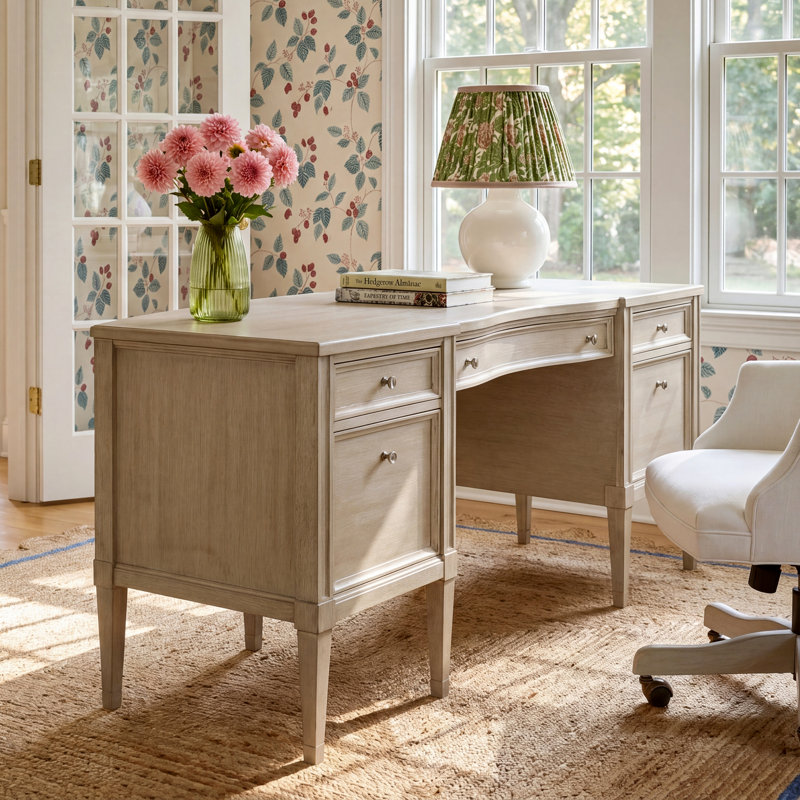
2026’s home office trend leans toward warm materials over cold minimalism: solid wood, visible grain, warm neutrals instead of glossy white laminate. It doesn’t have to be a custom piece, but something with texture will hold up better over time than a surface that shows every scratch and coffee ring.
| Pick | Why it works | Good for |
|---|---|---|
| Birch Lane Regan Desk | Warm wood finish, sturdy under a monitor stand | Everyday setups, ages well |
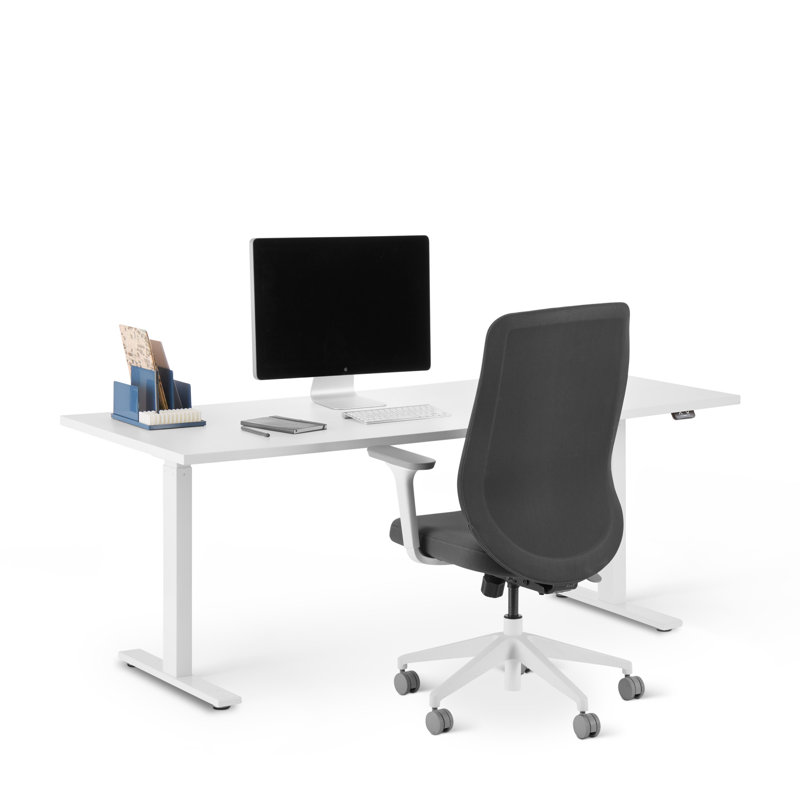
| Poppin Series L Standing Desk | Height adjustable for sitting and standing | Long work hours, back or hip discomfort |
Chair #
Skip picking the chair that photographs best first. Look for real lumbar support, adjustable seat height, and a stable five-point base, then narrow down by style from whatever’s left.


None of these are premium ergonomic chairs in the Herman Miller sense, and if there’s a diagnosed back condition involved, that’s a conversation for a physical therapist rather than a decor post. For everyday comfort during long work hours, all three cover the basics: adjustable height, a supportive back, and a base that won’t wobble.
Lighting #
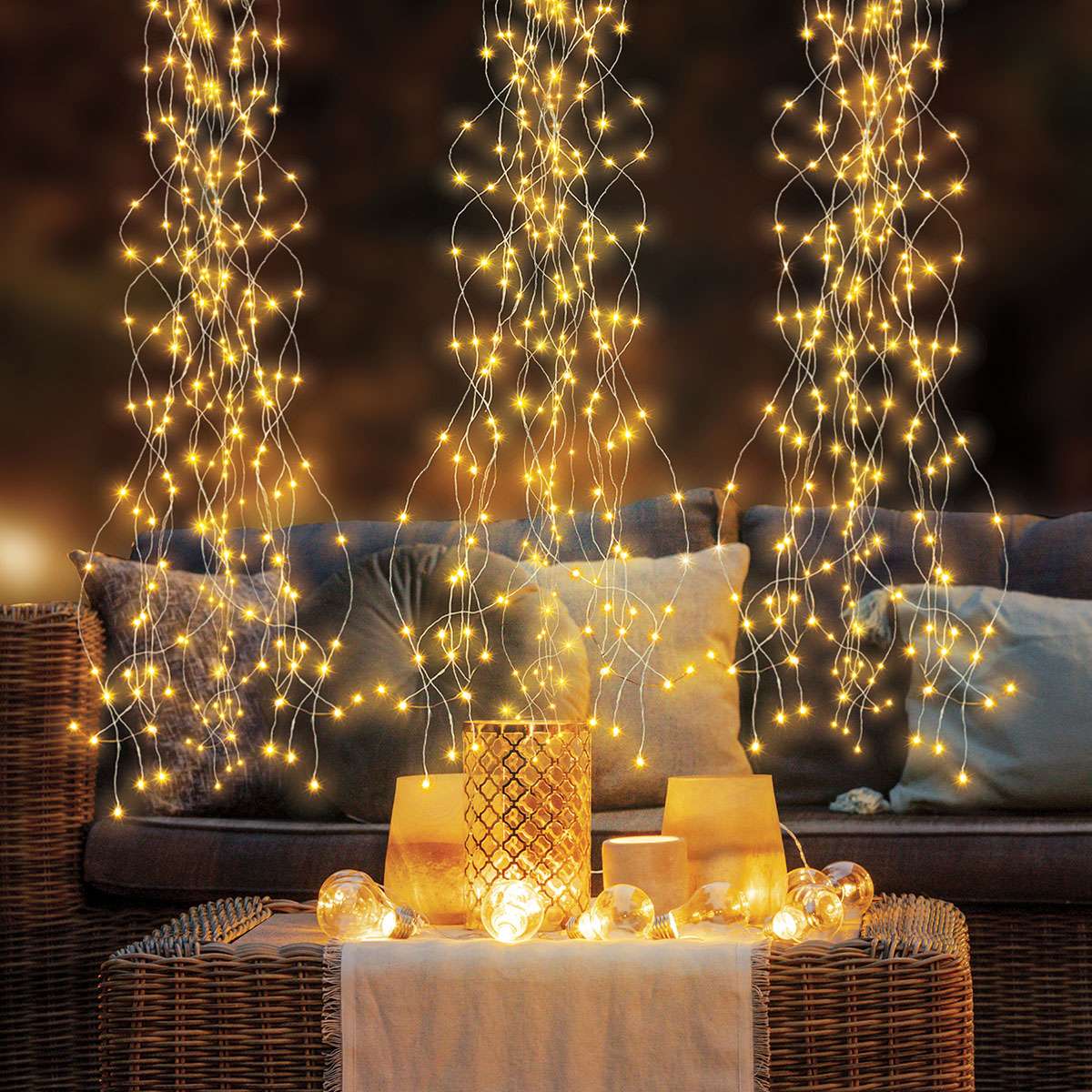
Lighting does more for a workspace’s overall feel than almost anything else on this list, and it’s usually the last thing anyone sets up. Three layers work best: natural light, a focused task light for actual work, and one ambient source for evenings and video calls.
The research backs this up specifically. Cornell University’s Department of Design and Environmental Analysis found that workers with more consistent natural light exposure reported meaningfully fewer symptoms of eyestrain and headaches, along with less daytime drowsiness, compared to workers relying only on artificial overhead lighting.


Layering checklist:
- Natural light: position the desk near a window if the layout allows it
- Task light: a lamp with adjustable color temperature, cooler for focused work, warmer in the evening
- Ambient light: fairy lights or an LED strip for the softer, non-work-mode feel
Desk Organization #
Desk organization tends to fail for one specific reason: the organizer doesn’t match what actually piles up. An oversized organizer just becomes a junk drawer with extra steps. Before buying anything, it helps to track what accumulates on the desk over a normal week, since most people over-buy for problems they don’t have and under-buy for the one thing that’s genuinely chaotic (usually cords or loose paper).
Problem: loose stationery and small items

Use code PETAL10 to get 10% off on KoreKawaii and ChicChoi
Problem: cord chaos on top of the desk
Problem: paper and mail piling up
Small Desk Details #
This is where the “cute” in aesthetic home office setups usually comes from, and it’s also where things go wrong fastest. A few well-chosen pieces read as intentional. Ten random cute items read as clutter.


That planner pad is from ChicChoi. Code PETAL10 takes 10% off at chicchoi.com if ordering directly from their site.
A retro keyboard and mouse set looks purely decorative but isn’t. For anyone typing for hours at a time, a keyboard that’s actually pleasant to look at and use changes how the whole desk feels, not just how it photographs.
Wall and Shelf Styling #
Empty wall space above a desk is easy to overfill randomly. A better approach: pick a small palette (2 to 3 colors, one accent material like wood or brass) and repeat it across the shelf, frame, and any small objects.
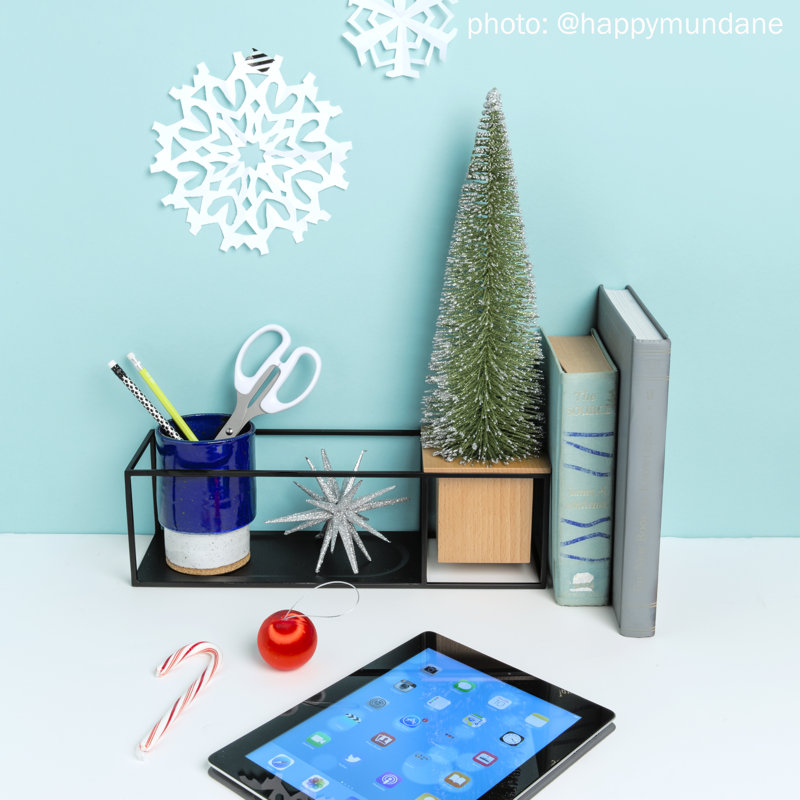
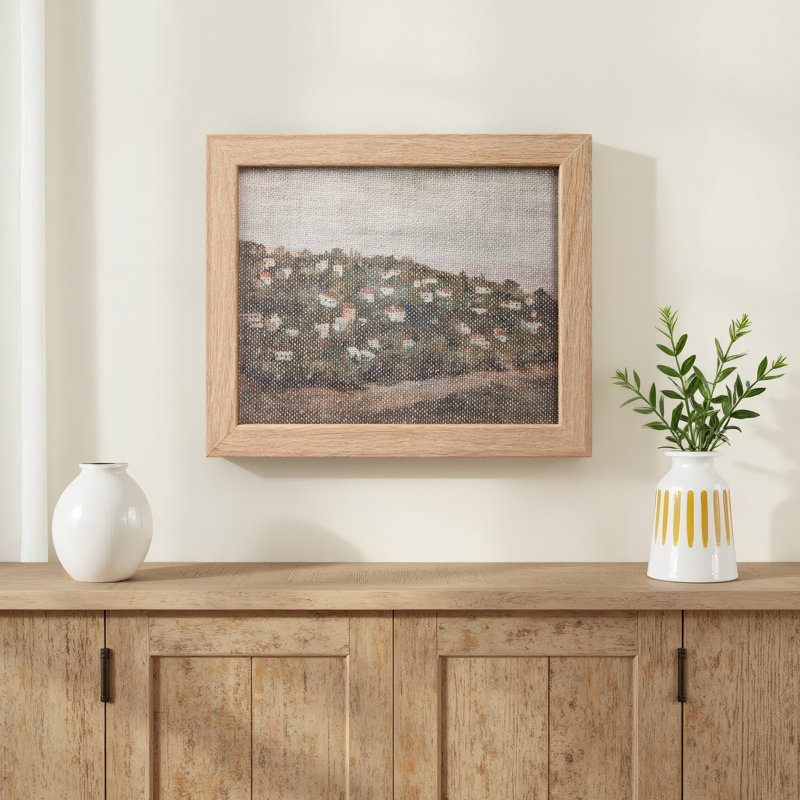
For anyone who’d rather skip figurative art with people in it, landscapes, abstract prints, typography, and botanical prints all give the same visual anchor without that concern. A floating shelf styled with two or three objects, a small vase, a stack of books, one plant, reads as more intentional than a shelf packed edge to edge.
Rugs and Texture #
A rug under a desk chair does two jobs: it protects the floor from chair wheel damage, and it makes the corner feel like a designed part of the room instead of a workstation dropped into it.
Low-pile or flatweave rugs hold up best under a rolling chair. Thick plush rugs look great in photos and are genuinely frustrating to roll a chair across all day. Throw blankets, a woven basket for cords or notebooks, and a textured seat cushion do a similar warming-up job for less money if a full rug isn’t in the budget yet.
Plants and Greenery #
Plants are one of the more effective, lower-cost styling tools in a home office: height in a corner, softness on a high shelf, texture on the desk itself. Buying real plants from a local nursery rather than a specialty online retailer tends to be cheaper and gives more control over exactly which plant and pot combination shows up.
For low-maintenance options that tolerate irregular watering and lower light, pothos, snake plants, and ZZ plants are worth asking for by name. They’re consistently recommended in plant care guides specifically for beginners and low-light rooms, which covers most home offices that aren’t sitting directly next to a large window.
Cable Management #
No home office looks put together with a nest of cords hanging off the back of the desk, regardless of how good the lamp is. A basic cable box, adhesive clips along the desk leg, and a cord organizer for anything on the desktop itself handle most of it. This is one of the highest “looks better instantly” upgrades for the lowest cost on this entire list.
Common Mistakes to Avoid #
Buying decor before furniture. A well-chosen desk organizer on a wobbly, undersized desk doesn’t fix the underlying problem.
Overhead lighting only. A single harsh overhead source is the fastest way to make an otherwise nice room look flat, both in person and on camera.
Matching everything too perfectly. A workspace that’s one color and one material end to end can start to feel like a showroom rather than a lived-in room. Mixing in at least one textured or slightly mismatched element usually reads better than a fully coordinated set.
Ignoring actual habits. If the same three items always end up on the desk, storage should be built around those three items specifically, not a generic organizer that doesn’t fit any of them.
Skipping the chair test. Sitting in a chair for at least ten minutes before buying, or sticking to a strict return window when buying online, catches problems a product photo never will.
Desk Comparison Table #
| Product | Best For | Key Features | Pros | Cons | Price Range | Alternative |
|---|---|---|---|---|---|---|
| Birch Lane Regan Desk | Warm wood aesthetic, everyday use | Solid construction, classic silhouette | Sturdy, ages well, fits most styles | Fixed height only | $2399 | AllModern Poppin Standing Desk |
| AllModern Poppin Series L Standing Desk | Sit-stand flexibility, long work hours | Height adjustable, clean modern lines | Good for back and hip comfort | Higher price point | $780 | Lundquist Wood Desk |
Buying Guide #
What to look for:
- A desk deep enough for a monitor setup plus a few inches of clear space in front of the keyboard
- A chair with adjustable height and real lumbar support, not just a cushioned back
- Lighting with adjustable warmth, not just brightness
- Storage sized to what’s actually owned, not what looks good empty in a photo
What to avoid:
- Glossy white desks and organizers in households prone to scratches or hard water rings, since they show everything
- Ultra-plush rugs under a rolling chair
- Buying an entire matching “collection” before living with the space for a few weeks
- Skipping return policies on furniture, especially chairs and desks bought online sight unseen
Common buying mistakes: Buying the whole aesthetic in a single order is the most common one. Rooms that feel collected over time, rather than bought all at once, tend to read as more personal and age better too. Adding one or two pieces a month is a reasonable pace for most budgets.
Important considerations: For renters, check what can be attached to walls before buying wall-mounted shelving, and consider tension rods or leaning shelves as an alternative. For shared workspaces, prioritize storage that closes (drawers, lidded boxes) over open displays, since open shelving gets messy fast with more than one person using the same desk.
FAQ #
What are the must-have items for a home office?
A supportive chair, a desk sized for the actual work being done, task lighting, basic cable management, and one storage solution for whatever tends to pile up. Everything beyond that is styling, not function.
How do I make my home office look aesthetic on a budget?
Start with lighting and a cord organizer, since both are inexpensive and make an immediate visual difference. Add one accent piece (a lamp, a rug, or wall art) before buying a full matching set.
What color scheme works best for a home office?
2026’s trend leans toward warm neutrals like oat, camel, and soft olive instead of stark white or cold gray, but the most effective palette is really whatever colors hold up to being looked at for eight hours without feeling boring or overstimulating.
Is a standing desk worth it?
Mainly for people who’ll actually alternate between sitting and standing throughout the day. For anyone who knows they’ll leave it in one position permanently, a fixed-height desk is the better use of the budget.
How do I organize a small home office?
Prioritize vertical space (floating shelves, a pegboard) over floor space, and pick a desk with built-in storage rather than adding separate furniture pieces that eat into square footage.
What’s the best lighting setup for a home office?
A layered setup: natural light where possible, a task lamp with adjustable warmth near the keyboard, and one ambient source (fairy lights, a floor lamp) for evenings and calls.
How often should home office decor be updated?
There’s no fixed rule. Function pieces like the chair and desk should last for years. Smaller styling details, a planner cover, a lamp, desk accessories, are fine to swap seasonally if that keeps the space feeling fresh.
Can a home office be decorated without spending much?
Yes. Cable clips, a cord organizer, and rearranging existing furniture for better lighting get most of the visual improvement before spending anything on new pieces.
What rug works best under a desk chair?
Low-pile or flatweave rugs hold up best under rolling chair wheels. Thick plush rugs look great but wear out faster and drag under daily rolling.
Is a real plant worth buying for a home office with low light?
Yes, with the right plant. Pothos, snake plants, and ZZ plants are specifically suited to low light and irregular watering, making them a safer starting point than anything that needs direct sun.
Do I need a dedicated office chair if I already own a comfortable one?
Not necessarily. If an existing chair supports the back properly and has a stable base, there’s no need to replace it just for the sake of a matching set. Ergonomics matter more than the label on the chair.
How do I hide cords in a home office without a big renovation?
Adhesive cord clips along the desk leg, a basic cable box behind the desk, and a small desktop organizer for anything charging handle almost all of it for under $30 total.
Related Reads on Petal Lifestyle #
For more on building out the rest of the space:
- Kawaii Home Office Decor Ideas (Muslim-Friendly): Cute & Productive Workspace Tips
- Top Hygge-Inspired Decor Ideas for a Cozy Home This Winter
- Budget Room Makeover Ideas That Actually Work (No Influencer Budget Required)
- How to Create a Cozy Reading Corner That’s Pure Bliss
If this made it easier to figure out where to start, save it for when it’s time to shop, and drop a comment on what a current home office setup is still missing. For more workspace and productivity content like this, the newsletter covers it first, along with a few things that don’t make it to the blog at all.